
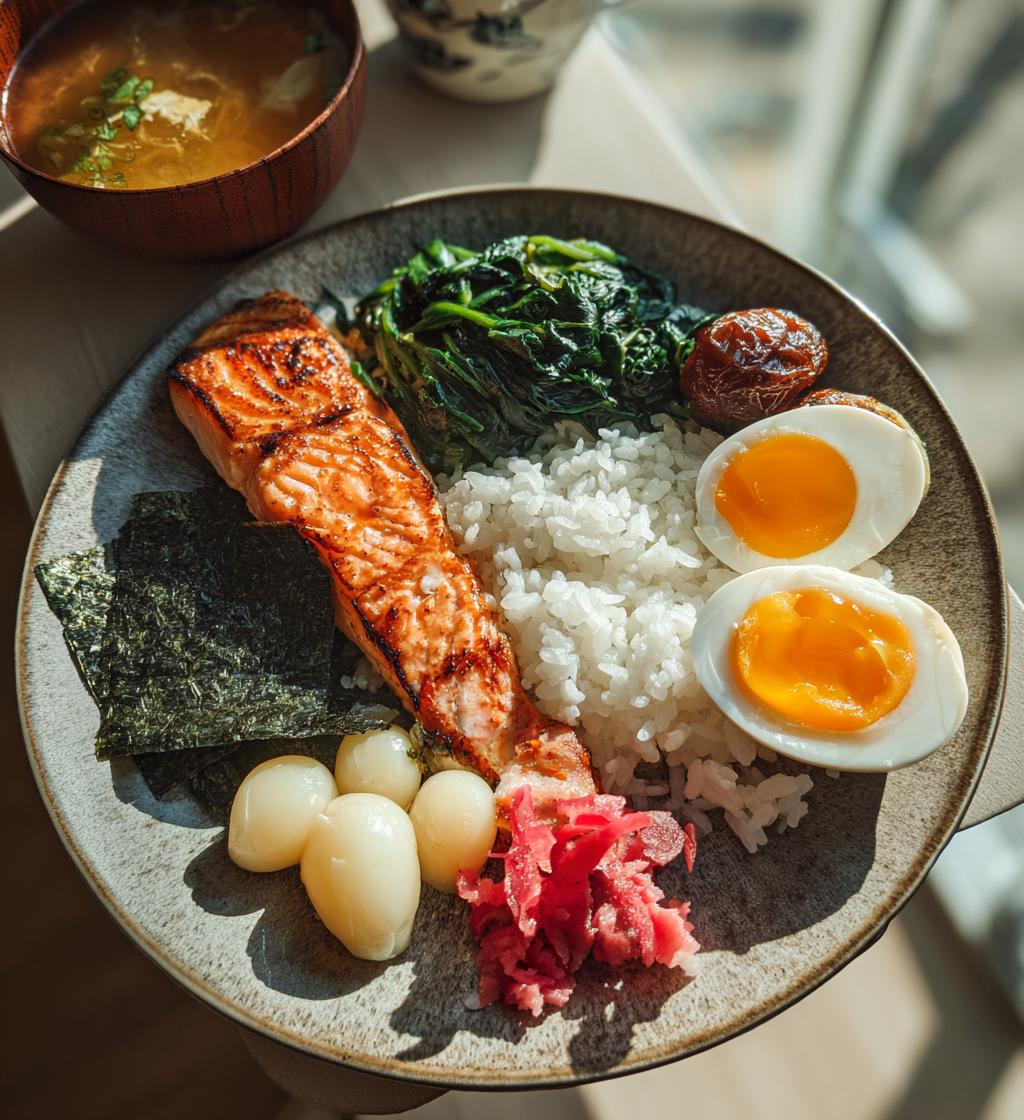
Starting your day with a nutritious breakfast isn’t just a good idea; it’s a game changer! I’ve always found that a hearty breakfast sets the tone for my entire day. That’s why I absolutely love a traditional Japanese breakfast. It’s not only beautifully presented, but it also offers a perfect balance of flavors and nutrients that keep me going strong. Imagine a warm bowl of rice, savory grilled salmon, and a comforting cup of miso soup greeting you in the morning. Each component is carefully chosen, from the umami of the fish to the bright tang of pickled plums, creating a meal that’s both satisfying and energizing. Trust me, once you dive into this delicious spread, you’ll understand why a Japanese breakfast is a beloved staple in so many homes. Let’s get started on how to make this delightful breakfast at home!
Ingredients List
Gathering the right ingredients is key to creating a delicious Japanese breakfast that’s both nutritious and satisfying. Here’s what you’ll need:
- 2 cups cooked rice: Use short-grain rice for that perfect sticky texture. You can make it ahead of time and keep it warm while preparing the other dishes.
- 4 oz grilled salmon: Fresh salmon fillets are ideal; grill them until they’re fully cooked and flaky. The smoky flavor adds a wonderful richness to your breakfast.
- 1 cup miso soup: This comforting soup is made with miso paste and dashi broth. You can heat it up in a pot just before serving to ensure it’s warm and soothing.
- 2 pickled plums (umeboshi): These tangy, salty plums provide a delightful contrast to the other flavors. They’re a traditional accompaniment and add a zing to your meal.
- 1 cup steamed spinach: Lightly steam the spinach until it’s just tender. It’s a great way to add some greens and a boost of nutrients!
- 2 eggs (soft-boiled): Boil the eggs until they have a slightly runny yolk, which adds a creamy element to the breakfast. They’re a delicious protein source!
- 1 sheet nori (seaweed): Cut it into strips for wrapping around rice or just for a crunchy side. Nori adds a lovely umami flavor that completes the meal.
With these ingredients at hand, you’re well on your way to making a delightful and balanced Japanese breakfast that’ll leave you feeling energized and ready to take on the day!
How to Prepare Japanese Breakfast
Preparing a traditional Japanese breakfast is a rewarding process that brings together a medley of flavors and textures. Don’t worry; I’ll walk you through it step by step, making it easy to follow. Let’s dive right into it!
Step-by-Step Instructions
- Start with the rice: If you haven’t already, cook your short-grain rice according to your rice cooker or stovetop instructions. It usually takes about 20 minutes. Once it’s cooked, keep it warm by covering it with a clean cloth or lid to maintain that lovely steam.
- Grill the salmon: While the rice is cooking, preheat your grill or a frying pan over medium heat. Season the salmon fillets lightly with salt. Grill them for about 4-5 minutes per side, or until they’re fully cooked and flaky. The aroma that fills your kitchen will be simply irresistible!
- Heat the miso soup: In a separate pot, pour in the miso soup and heat it gently over low to medium heat. You want it warm, not boiling. This should take about 5 minutes. Stir it occasionally to help dissolve the miso paste completely.
- Prepare the pickled plums: While everything is cooking, take your umeboshi and place them on the serving plate. You can leave them whole or slice them in half to showcase their vibrant color.
- Steam the spinach: In a steamer basket, toss in the fresh spinach. Steam it for about 2-3 minutes, just until it’s tender but still bright green. It’s a quick step that adds a fresh element to your meal!
- Soft-boil the eggs: In another pot, bring water to a gentle boil. Carefully add your eggs and boil them for about 6-7 minutes for that perfect soft yolk. Once done, immediately transfer them to an ice bath to stop the cooking process. After a few minutes, gently peel the eggs.
- Assemble your breakfast: Now, it’s time to bring everything together! On a tray, arrange the warm rice, grilled salmon, steaming miso soup, tender spinach, soft-boiled eggs, and pickled plums. Don’t forget to add a sheet of nori on the side for a delightful crunch!
And there you have it — a beautifully arranged traditional Japanese breakfast ready to be enjoyed! It’s all about timing and ensuring everything is fresh and warm when you serve it. Trust me, the effort is well worth it when you sit down to this delightful spread!
Why You’ll Love This Recipe
This traditional Japanese breakfast isn’t just a feast for the eyes; it’s packed with benefits that make it an ideal way to kick off your day. Here’s why you’ll absolutely love making this recipe:
- Nutritious: Each component is loaded with vitamins and minerals, providing a wholesome start that fuels your body.
- Balanced: With a perfect mix of protein from the salmon and eggs, carbs from the rice, and fiber from the spinach, this meal hits all the right notes.
- Quick to prepare: You can have this delicious breakfast ready in just about 40 minutes, making it perfect for busy mornings.
- Easy to customize: Feel free to swap in your favorite proteins or veggies to make it your own. It’s versatile, so you won’t get tired of it easily!
- Comforting and satisfying: The combination of warm rice, savory salmon, and soothing miso soup creates a delightful comfort food experience that’s hard to resist.
Trust me, once you try this Japanese breakfast, you’ll find it becomes a cherished part of your morning routine!
Tips for Success
To ensure your traditional Japanese breakfast turns out perfectly every time, here are some pro tips that I swear by. These little adjustments can make a big difference in flavor and presentation!
- Use a rice cooker: If you have one, a rice cooker is a fantastic tool for getting that perfectly cooked rice every time. Just rinse the rice until the water runs clear, then follow the cooker’s instructions. It takes the guesswork out of cooking!
- Choose high-quality salmon: Fresh, high-quality salmon can elevate your breakfast. If possible, opt for wild-caught salmon; it has a richer flavor and better texture than farmed varieties. Plus, it’s more sustainable!
- Experiment with miso types: There are different types of miso paste — white, yellow, and red — each bringing its own unique flavor profile. Feel free to experiment and find which one you love best in your soup!
- Perfect your egg boiling: For that ideal soft-boiled egg, timing is crucial. If your eggs are super fresh, you might need to adjust the boiling time slightly, as fresher eggs can take a minute longer to reach that oozy goodness.
- Don’t skip the ice bath: This step is crucial for achieving that tender, perfectly soft yolk. It halts the cooking process immediately, ensuring your eggs don’t get overcooked. Trust me, you’ll be thankful for this tip!
- Prep ahead: If you’re short on time in the morning, feel free to prepare some components the night before. You can cook the rice, grill the salmon, and even make the miso soup ahead of time. Just reheat everything in the morning for a quick assembly!
With these tips, you’ll not only master the art of making a traditional Japanese breakfast but also enjoy the process along the way. Happy cooking!
Variations of Japanese Breakfast
One of the beautiful things about a traditional Japanese breakfast is its versatility! You can easily switch things up to keep your morning meal exciting and tailored to your tastes. Here are some fun ideas for variations that will still honor the essence of this wholesome breakfast:
- Different Proteins: Instead of grilled salmon, why not try other proteins? Grilled mackerel or even teriyaki chicken can bring a delightful twist. For a vegetarian option, consider adding grilled tofu or a savory omelet filled with your favorite vegetables.
- Switch up the Greens: While steamed spinach is a classic choice, you can experiment with different greens. Try sautéed bok choy, steamed asparagus, or even a light salad of mixed greens tossed with a sesame dressing for added crunch and flavor.
- Flavorful Miso Soup: Give your miso soup a makeover by adding different ingredients! Tofu, seaweed (wakame), or even sliced mushrooms can enhance the flavor profile. You could also add a splash of soy sauce or a sprinkle of green onions for an extra burst of taste.
- Explore Other Pickled Vegetables: If umeboshi isn’t your thing, consider incorporating other pickled vegetables. Pickled cucumbers or even pickled radishes can add a refreshing zing to your plate, and they’re just as traditional!
- Experiment with Rice: While short-grain rice is a staple, you could try using brown rice or even quinoa for a nutty flavor and additional health benefits. Mixing in some furikake (a savory rice seasoning) can elevate the rice’s flavor, adding a fun twist!
- Sweet Elements: For a change of pace, try adding a sweet element to your breakfast! A small bowl of fresh fruit or a drizzle of honey over your soft-boiled eggs can introduce a lovely contrast to the savory components.
These variations not only allow you to customize your breakfast to fit your cravings but also keep the spirit of a traditional Japanese breakfast alive. Feel free to mix and match, and most importantly, have fun experimenting in your kitchen!
Nutritional Information
Understanding the nutritional content of your meals is important, especially when you’re aiming for a balanced diet. Here’s an estimate of the nutritional values for a serving of this traditional Japanese breakfast:
- Calories: 500
- Protein: 30g
- Fat: 18g
- Saturated Fat: 4g
- Unsaturated Fat: 10g
- Trans Fat: 0g
- Carbohydrates: 60g
- Fiber: 3g
- Sugar: 4g
- Sodium: 800mg
- Cholesterol: 200mg
Keep in mind that these values are estimates and can vary based on specific brands or modifications you make to the recipe. Regardless, this breakfast is a nutritious way to start your day, combining protein, healthy fats, and carbohydrates to keep you energized and satisfied!
FAQ Section
Q1. Can I prepare the rice the night before?
Absolutely! You can cook the rice the night before and keep it in the fridge. Just warm it up in the morning before serving. It saves time and ensures you can enjoy a delicious Japanese breakfast even on busy mornings!
Q2. What can I substitute for miso soup?
If you’re not a fan of miso soup, you can try a simple vegetable broth or even a light chicken broth as an alternative. Just remember to keep it comforting and warm — that’s the key to a cozy breakfast!
Q3. How do I make my eggs perfectly soft-boiled?
For perfect soft-boiled eggs, bring your water to a gentle boil before adding the eggs. Boil them for about 6-7 minutes, then plunge them into an ice bath immediately. This method gives you that silky, runny yolk that pairs beautifully with the rest of your meal!
Q4. Can I use frozen salmon for this recipe?
Yes, you can use frozen salmon! Just make sure to thaw it completely in the fridge overnight before grilling. It’s a convenient option and still provides great flavor and nutrition!
Q5. How can I make this breakfast vegetarian?
To make a vegetarian version of this traditional Japanese breakfast, simply replace the salmon with grilled tofu or tempeh. You can also add more vegetables or even a delicious veggie omelet for added protein and flavor!
Japanese Breakfast: 7 Reasons You’ll Adore This Delightful Classic
- Total Time: 40 minutes
- Yield: 2 servings 1x
- Diet: Gluten Free
Description
A traditional Japanese breakfast offers a balanced and nutritious start to your day.
Ingredients
- 2 cups cooked rice
- 4 oz grilled salmon
- 1 cup miso soup
- 2 pickled plums (umeboshi)
- 1 cup steamed spinach
- 2 eggs (soft-boiled)
- 1 sheet nori (seaweed)
Instructions
- Prepare cooked rice and keep it warm.
- Grill the salmon until fully cooked.
- Heat miso soup in a pot.
- Prepare pickled plums and place them on the plate.
- Steam spinach until tender.
- Boil the eggs until soft, then peel.
- Serve rice, salmon, miso soup, spinach, eggs, and nori on a tray.
Notes
- This meal is best enjoyed fresh.
- Adjust the amount of rice according to your appetite.
- Feel free to add other side dishes like tofu or vegetables.
- Prep Time: 15 minutes
- Cook Time: 25 minutes
- Category: Breakfast
- Method: Grilling, Boiling, Steaming
- Cuisine: Japanese
Nutrition
- Serving Size: 1 serving
- Calories: 500
- Sugar: 4g
- Sodium: 800mg
- Fat: 18g
- Saturated Fat: 4g
- Unsaturated Fat: 10g
- Trans Fat: 0g
- Carbohydrates: 60g
- Fiber: 3g
- Protein: 30g
- Cholesterol: 200mg
Keywords: japanese breakfast, traditional breakfast, healthy breakfast